
How to Keep Balayage Color Vibrant for Longer
Last Updated: November 8, 2026
Quick Summary
Keep balayage color vibrant by waiting 48 hours before your first wash, then switching to sulfate-free shampoo and conditioner. Wash two or three times a week with cool water, use purple shampoo on a schedule set by your shade and porosity, and protect strands from heat and UV rays.
Wait at least 48 hours after balayage before your first wash to lock in the tone.
Wash hair two or three times a week with cool or lukewarm water to slow fading.
Use purple shampoo as a toner, not a cleanser, and set frequency by shade and porosity.
Apply a heat protectant before every hot tool and use a UV spray or hat outdoors.
Book a maintenance appointment every six to ten weeks to keep tone and roots in check.
Ready to protect your balayage color?
Hairplay matches aftercare and color services to your hair type and schedule.
Table of Contents
Why Balayage Color Fades and What Speeds It Up
Balayage color fades because lightened strands lose moisture and pigment every time water, heat, and sun hit them. The salon sets the color, but the next six weeks decide how long it lasts.
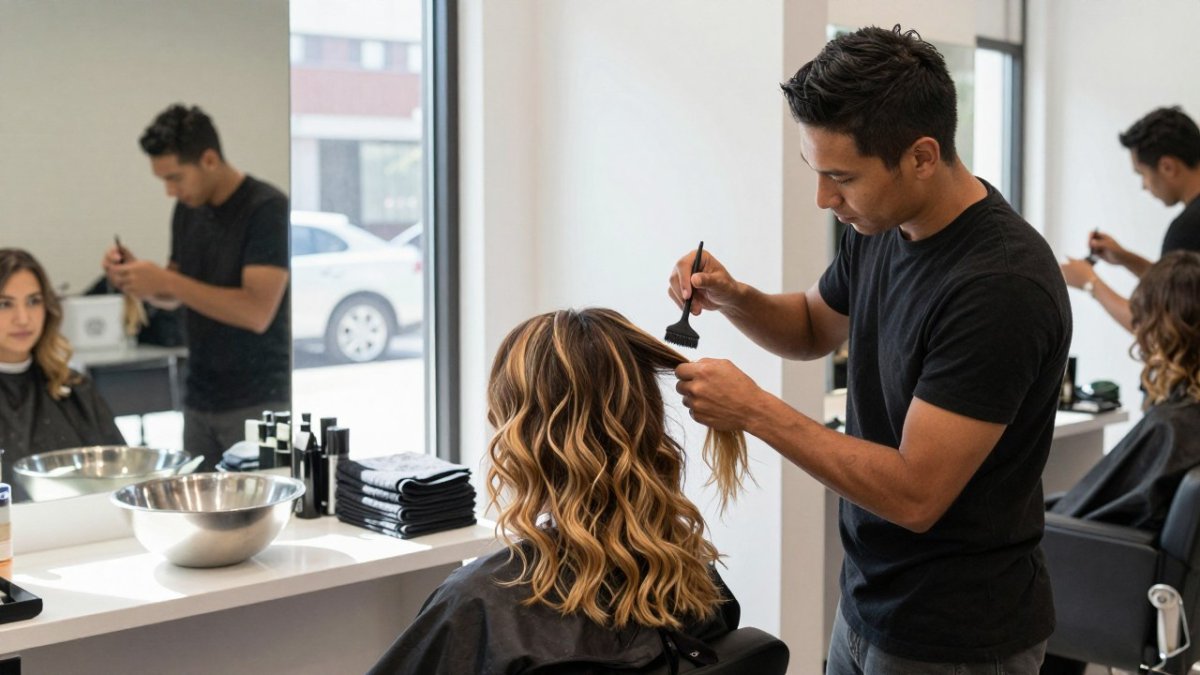
Balayage is a freehand painting technique that sweeps color through the mid-lengths and ends. Lightened hair has a more open cuticle, so it releases pigment faster than your natural roots. That is why the ends go brassy first.
Three things speed up fading:
Hot water, which lifts the cuticle on contact
Sulfate-heavy shampoo, which strips color with every wash
Heat tools and UV rays, which dry out lightened strands
The good news: five simple habits protect your investment. Below, we walk through each one in order of impact.
Tip 1: Wait 48 Hours Before Your First Wash
Wait at least 48 hours before your first wash after balayage. That window gives the cuticle time to settle and lock in the tone. Wash too soon and you rinse out fresh pigment before it has fully set.
A common mistake is jumping in the shower the same night to "get the salon feel back." Don't. Your color needs those two days.
When you do wash, keep it gentle:
Use lukewarm water, not hot
Shampoo only the scalp and let suds rinse through the ends
Skip the double wash on day one
That small pause is the easiest step in balayage aftercare at home, and the one most people skip.
Tip 2: Switch to Sulfate-Free Shampoo and Conditioner
Sulfate-free shampoo and conditioner are the single biggest upgrade for color-treated hair. Sulfates clean well, but they also strip pigment and natural oils from lightened strands. Swap them out and your color holds noticeably longer.
Look for labels that say "color-safe" or "sulfate-free." Pair a gentle shampoo with a moisturizing conditioner every wash, and add a deep conditioning mask once a week. Lightened hair drinks up moisture, and hydrated strands hold tone better.
Watch out: clarifying shampoos and volumizing formulas often carry the harshest surfactants. Save those for rare use, never weekly.
If you want products matched to your hair type, our salon's own Hair-Play SET and SEAL line is built for exactly this kind of aftercare.
Tip 3: Wash Less Often and Rinse with Cool Water
Washing less often is the simplest way to slow color fade. Every wash opens the cuticle and sends a little pigment down the drain. Stretch washes to two or three times a week, and use dry shampoo between them.
Cool water matters just as much. Hot water swells the cuticle, so pigment escapes faster. Rinse with cool or lukewarm water and finish with a cold shot to seal the cuticle flat.
Here is a realistic wash schedule:
Hair Type | Washes Per Week | Best Water Temp |
Fine, lightened | 2 | Cool |
Curly or textured | 2-3 | Lukewarm |
Oily scalp | 3 | Lukewarm |
Curly and textured hair can often stretch even further with a co-wash in between.
Tip 4: Use Purple Shampoo for Balayage Without Over-Toning
Purple shampoo for balayage neutralizes brassiness, but only when you use it correctly. The violet pigment cancels yellow and orange tones on lightened strands. Overdo it and your highlights turn ashy or lavender.

Most guides say "use purple shampoo weekly" and stop there. That advice fails two groups: people with very cool or ashy balayage, who do not need toning at all, and people with high-porosity hair, who absorb violet pigment fast and can go gray in a single over-long session. Treat purple shampoo as a toner, not a cleanser, and set your frequency by shade and porosity.
Use this as a starting rhythm:
Your Balayage Shade | Purple Shampoo Frequency | Leave-On Time |
Warm blonde or honey | Once a week | 3-5 minutes |
Cool or ashy blonde | Every other week, or skip | 2-3 minutes |
Brunette with caramel | Every 10-14 days | 3 minutes |
High-porosity lightened hair | Every other week | 2 minutes, watch closely |
Low-porosity lightened hair | Weekly | 5 minutes |
Follow these rules every time:
Apply to wet hair, not dry, so the pigment distributes evenly
Focus on mid-lengths and ends, where brass shows first
Alternate with your regular color-safe shampoo so you are not toning on back-to-back washes
Rinse thoroughly; leftover violet pigment dulls shine
Watch out: if your ends start looking gray, lilac, or flatter than usual, you have over-toned. Stop purple shampoo for two to three weeks, use a moisturizing mask, and let the violet fade. Do not try to fix it with more purple shampoo.
A common pattern is that readers confuse purple shampoo with a clarifier. It does not remove mineral buildup or product residue, and using it in place of a weekly wash can leave hair coated. Keep a clarifying rinse on a monthly schedule instead, and follow it with deep conditioning.
If your balayage is very cool or ashy, skip purple shampoo entirely and rely on a color-safe shampoo plus a bond-repair treatment. Violet pigment on already-cool tones is the fastest route to a dull, gray cast.
Tip 5: Protect Against Heat Styling and UV Rays
Heat and sun are the quiet killers of balayage color. A hot flat iron or a day at the beach can fade lightened strands faster than a week of washing.
Apply a heat protectant before any hot tool, every single time. Keep irons and dryers on medium heat, and never press a hot tool onto damp hair. For sun, use a UV protectant spray or a hat on long outdoor days. UV rays break down pigment and dry out the cuticle.
A few habits that protect color:
Air-dry when you can
Use the lowest heat setting that gets the job done
Rinse hair with fresh water after swimming in chlorinated or salt water
Wear a hat for long sun exposure
Hard water and mineral buildup also dull color over time. A clarifying rinse once a month, followed by deep conditioning, keeps strands clear and shiny.
Balayage Aftercare at Home: Build a Routine by Hair Type
Balayage aftercare at home should match your hair type, porosity, and shade. There is no single routine that fits everyone. Build yours around how your hair actually behaves.
Hair porosity is how easily your strands absorb and hold moisture. Low-porosity hair holds color longer but resists moisture. High-porosity hair takes color fast and loses it fast, so it needs more conditioning.
Use this as a starting point:
Hair Type | Wash Frequency | Deep Condition | Purple Shampoo |
Fine, straight | 2x per week | Every 10 days | Weekly |
Curly or wavy | 2-3x per week | Weekly | Every other week |
Coily or textured | 1-2x per week | Weekly | As needed |
High porosity | 2x per week | 2x per week | Weekly |
Bond-repair treatments help lightened hair rebuild strength over time. Add one every few weeks if your ends feel brittle. A color refresh at the salon handles tone when at-home care is not enough.
When to Book a Balayage Maintenance Appointment
Book a balayage maintenance appointment every six to ten weeks to keep tone and root growth in check. The exact interval depends on how fast your hair grows, how often you wash, and how much heat you use.
Use this planning guide:
Situation | Typical Timing | What to Book |
Toner fading, roots under an inch | Week 6-8 | Toner refresh |
Roots over an inch, tone still good | Week 8-10 | Root touch-up |
Both tone and roots visible | Week 8-10 | Full touch-up plus toner |
Very fast hair growth | Every 6 weeks | Root touch-up |
Slow growth, low heat use | Every 10-12 weeks | Toner refresh |
Signs it is time to book:
Your ends look yellow or orange, not soft and blended
Roots show more than an inch of growth
Color looks dull even after a fresh wash
Your toner has faded and highlights look flat
Before you book, try one at-home step: use your purple shampoo on the recommended schedule for two weeks and add a deep conditioning mask. If the brassiness lifts, you can wait for your next toner refresh. If it does not, the toner has faded past what at-home care can fix, and it is time for the salon.
Pricing depends on hair length, technique, and the service you book. For current prices or a quote, check Hairplay's website before you visit.
If you are ready to schedule, you can review our salon services to see the full color menu. Then book your stylist online in a few clicks. Not sure who to see? Read our guide on how to choose a hair colorist. And if it is your first visit, learn how to prepare for a color consultation before you arrive.
Your balayage deserves care that matches the craft behind it. At Hairplay, we tailor every color service to your hair type, from long and curly to straight and short, and we send you home knowing exactly how to keep it fresh. Our stylists specialize in color maintenance and personalized scheduling that fits busy weeks. Get started with Hairplay and keep your color vibrant between every visit.
Frequently Asked Questions
How many days after balayage can I wash my hair?
Wait at least 48 hours after your appointment before washing. The color needs time to settle into the hair cuticle, and washing too soon can strip fresh toner and cause premature fading. After that first wash, aim for two to three times per week with a sulfate-free shampoo and cool water to protect your balayage color.
Should I use purple shampoo if I have a balayage?
Yes, if your balayage is lightened to blonde or cool tones. Purple shampoo neutralizes brassiness, but use it sparingly: once a week or every other week is enough for most people. Overuse can leave a violet cast on lightened hair. Alternate with a color-safe moisturizing shampoo to keep hair healthy and your balayage aftercare at home balanced.
How often should I get balayage touched up?
If you have dark hair, you might stretch it to 12 to 16 weeks because the grow-out is softer. During the appointment, your stylist can refresh toner, blend root growth, and trim split ends. Waiting longer than that can make the transition line more visible and require more color correction.
What should I do when my balayage grows out?
When your balayage grows out, you have three options: book a toner refresh to brighten the mid-lengths, ask for a root shadow or gloss to blend the regrowth, or transition to a new look with a cut. If you want to keep the color, schedule a balayage maintenance appointment before the roots become too obvious. At home, use purple shampoo occasionally and keep up with deep conditioning.
Comments